Application example: Stem Cell Technologies

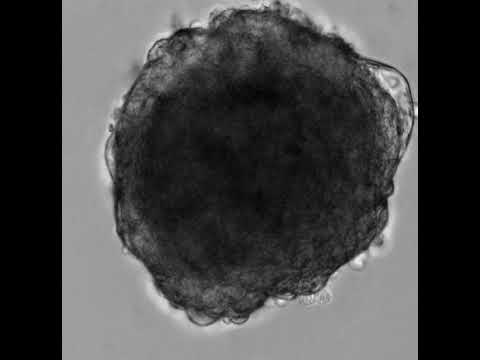
2D and 3D platforms of the human heart

Privacy warning

With the click on the play button an external video from www.youtube.com is loaded and started. Your data is possible transferred and stored to third party. Do not start the video if you disagree. Find more about the youtube privacy statement under the following link: https://policies.google.com/privacy

A key focus of our stem cell research is the translational investigation of the human heart. To this end, we use adherent cell culture systems based on human cardiomyocytes as well as more complex, multicellular 3D cardiac organoids.

Using functional assays, parameters such as contractile behavior and other essential physiological readouts can be analyzed. These platforms enable the modeling of cardiac diseases, including hypertrophy and myocardial infarction, to assess the efficacy of novel therapeutic approaches. In addition, safety-related parameters can be evaluated and potential cardiotoxic side effects identified, making an important contribution to the safe development of new medicines.

Use of differentiated cardiac cells and cardiac organoids

From progenitor cells to functional cardiac cells and cardiac organoids

  • Scalable differentiation of human iPSCs into cardiomyocytes, fibroblasts, and endothelial cells
  • Differentiation of reporter cell lines
  • Differentiation of iPSC lines carrying genetic mutations
  • Individualized and flexible assembly of multicellular cardiac organoids using a modular “building block” approach

Disease models

Utilization in cardiovascular disease modeling, including:

  • Myocardial infarction
  • Cardiac fibrosis
  • Hypertrophy
  • Genetic diseases such as hypertrophic cardiomyopathy

Applications

  • Toxicity assessment using, among others, viability assays, cytotoxicity measurements, and biomarker analyses
  • Compound characterization in single-cell systems as well as complex cell culture models
  • Electrophysiological analyses using multielectrode array (MEA) recordings with iPSC-derived cardiomyocytes or video-based contraction measurements of beating cardiac organoids
  • Histological and immunocytochemical methods to assess phenotypic and morphological changes
  • Investigation of intercellular communication and cellular interactions within multicellular cardiac organoids
  • Immunocompetent cardiac organoids through the integration of iPSC-derived macrophages

Technologies for 2D and 3D characterization

  • Electrophysiology
  • Histology
  • 2D and 3D immunocytochemistry
  • Gene expression and protein analyses
  • Viability and cytotoxicity assays
  • Biomarker secretion analysis
  • Single-cell or bulk RNA sequencing
  • Fibrosis and angiogenesis analyses

Miniature Hearts: Cardiac Organoids With an Immune System

Press Release from May 5, 2025: „Multicellular human cardiac organoids for drug research“

What are cardiac organoids?

Slices from cardiac organoids
© Fraunhofer ITEM
Immunofluorescence staining of multiple embedded cardiac organoids. Endothelial cells (CD31⁺, yellow) form interconnected structures between cardiomyocytes (cTnT⁺, purple) within the organoids. Cell nuclei are shown in blue (Hoechst⁺). Scale bar: 500 µm.

Cardiac organoids are three-dimensional tissue models that recapitulate key structural and functional features of the human heart, thereby significantly extending conventional two-dimensional cell culture approaches.


The spatial organization of multiple cell types enables a more physiologically relevant test platform and enhances the translational value of experimental studies.

Relevant Publications

Kiselev E, Agyapong W, Jürgens B, Mohr E, Chatterjee S, Hunkler HJ, Salman J, Cipriano G, Bentele M, Liu J, Specht J, Menge KS, Waleczek FJG, Haas JA, Derda AA, Sonnenschein K, Gietz A, Neumüller S, Pfanne A, Beetz O, Pflaum M, Wiegmann B, Psaras Y, Toepfer C, Zweigerdt R, Radocaj A, Kraft T, Zeug A, Ponimaskin E, Korte W, Horke A, Ruhparwar A, Fuchs M, Xiao K, Bär C, Weber N, Thum T. Transcriptional and functional effects of mavacamten in multiple porcine and human models with hypertrophic cardiomyopathy. Br J Pharmacol. 2026 Mar;183(5):1122-1139. doi: 10.1111/bph.70247. Epub 2025 Nov 10. PMID: 41215595.

Durán V, Nikolouli E, Chatterjee S, Costa B, Pavlou A, Ziegler A, Becker J, Baumann K, Bruhn M, Haake K, Hashtchin AR, Gensch I, Korte A, Behrens YL, Zhang SY, Casanova JL, Bär C, Lachmann N, Thum T, Kalinke U. Type I IFNs Decrease SARS-CoV-2 Replication in Human Cardiomyocytes and Increase Cytokine Production in Macrophages. J Clin Immunol. 2025 Oct 21;45(1):149. doi: 10.1007/s10875-025-01943-6. PMID: 41117873; PMCID: PMC12540622.

Costa A, Boese A, Mohr E, Borisch C, Hunkler HJ, Hoepfner J, Chatterjee S, Thum T, Bär C. Generation of a human induced pluripotent stem cell reporter line to investigate cell division and proliferation. Stem Cell Res. 2025 Sep;87:103776. doi: 10.1016/j.scr.2025.103776. Epub 2025 Jul 16. PMID: 40694867.

Juchem M, Lehmann N, Behrens YL, Bär C, Thum T, Hoepfner J. CRISPR/Cas9-based GLA knockout to generate the female Fabry disease human induced pluripotent stem cell line MHHi001-A-15. Stem Cell Res. 2024 Sep;79:103478. doi: 10.1016/j.scr.2024.103478. Epub 2024 Jun 20. PMID: 38905814.

Neufeldt D, Schmidt A, Mohr E, Lu D, Chatterjee S, Fuchs M, Xiao K, Pan W, Cushman S, Jahn C, Juchem M, Hunkler HJ, Cipriano G, Jürgens B, Schmidt K, Groß S, Jung M, Hoepfner J, Weber N, Foo R, Pich A, Zweigerdt R, Kraft T, Thum T, Bär C. Circular RNA circZFPM2 regulates cardiomyocyte hypertrophy and survival. Basic Res Cardiol. 2024 Aug;119(4):613-632. doi: 10.1007/s00395-024-01048-y. Epub 2024 Apr 19. PMID: 38639887; PMCID: PMC11319402.

Jahn C, Juchem M, Sonnenschein K, Gietz A, Buchegger T, Lachmann N, Göhring G, Behrens YL, Bär C, Thum T, Hoepfner J. Generation of human induced pluripotent stem cell line MHHi029-A from a male Fabry disease patient carrying c.959A > T mutation. Stem Cell Res. 2024 Jun;77:103404. doi: 10.1016/j.scr.2024.103404. Epub 2024 Mar 24. PMID: 38552356.

Mohr E, Thum T, Bär C. Accelerating cardiovascular research: recent advances in translational 2D and 3D heart models. Eur J Heart Fail. 2022 Oct;24(10):1778-1791. doi: 10.1002/ejhf.2631. Epub 2022 Aug 4. PMID: 35867781.